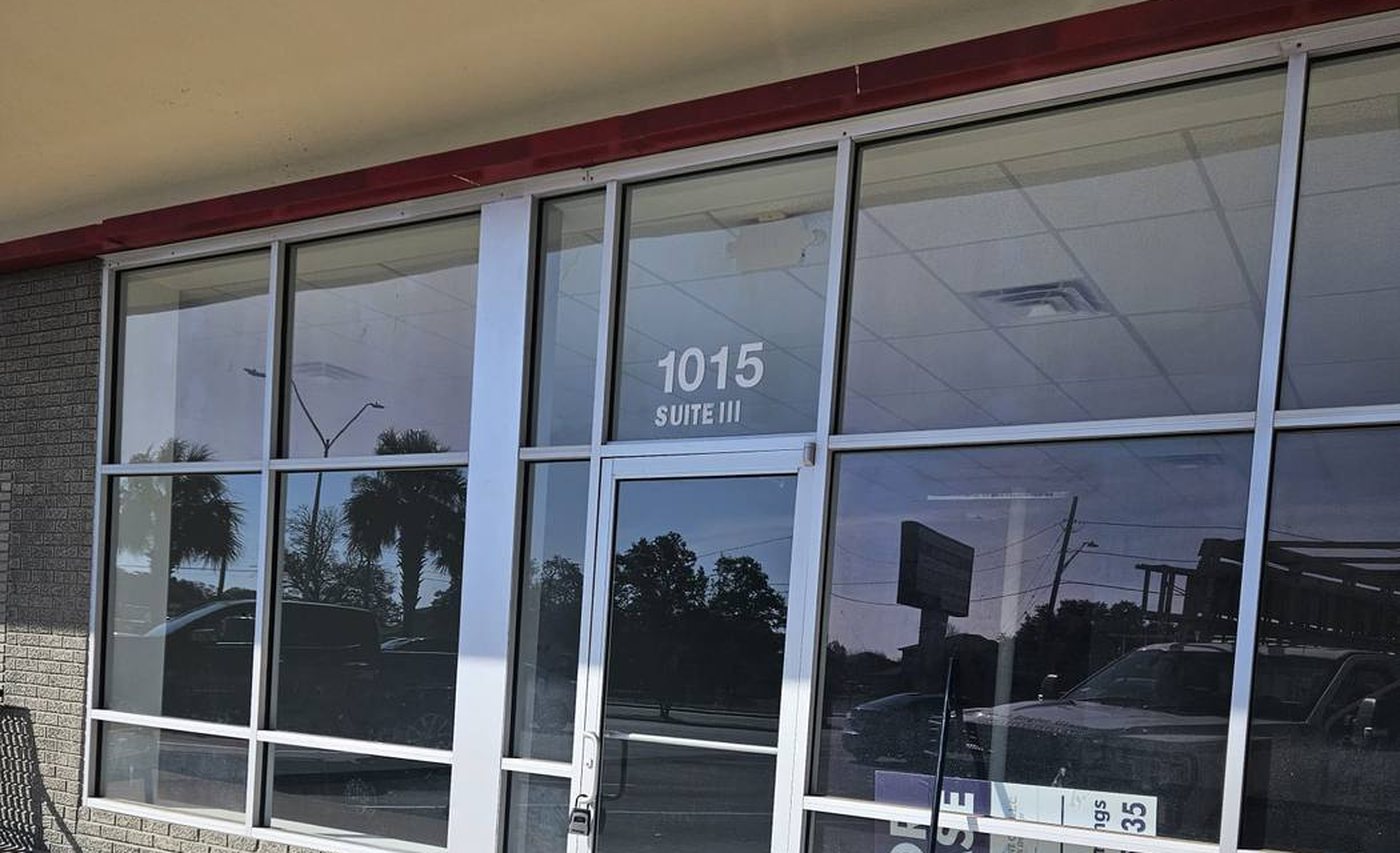
Storefronts, commercial doors, insulated units and safety glass for the buildings people work in. Every job is quoted from a site visit and cut to the frame that exists — not to the nearest standard size.
Broken storefront or a unit that won't secure? Call 830 822 5972 — we board up to make the premises safe, then return to glaze.
From a single failed sealed unit in an office to a whole storefront elevation. We work to the building's use — what the glass has to survive decides what gets specified.
Aluminum storefront glazing — repair, re-glaze and full replacement of framing, transoms and bulkhead glass.
Aluminum and frameless glass entrances that have to open several hundred times a day and keep closing properly.
Fogged, blown or failed sealed units. The unit is replaced; the frame stays. In most cases the opening never has to come apart.
Where glass sits in a door, near the floor, or anywhere the building code calls it a hazardous location.
Break-ins, storm damage, vehicle strikes. Securing the premises comes first — glazing follows on a booked visit.
Glazed elevations above ground floor, surveyed before anything is quoted — access decides as much as the glass does.
Glass inside the building envelope — partitions, wall mirrors, shelving and tabletops cut to a template.
For portfolios rather than single addresses: surveys, planned replacement and a standing number to call.
Most of our work comes through the person responsible for the building rather than the person in it — and the job is judged on how little disruption it caused.
Multiple addresses, one number to call, and a written quote that survives being forwarded to an owner.
Glazing packages on fit-outs and remodels, sequenced to the build schedule rather than to ours.
Storefronts and entrance doors that have to look right at opening time. Work scheduled around trading hours.
Partitions, internal screens and sealed units replaced with the floor still occupied and left clean.
Apartment and condominium glazing at volume — the same unit, the same spec, across a whole block.
Safety glazing where it is required, and work that can be done outside the hours the building is in use.
Commercial glass is chosen for what it has to do — hold a person up, stay together when it breaks, keep the heat out, or keep the building shut. This is the short version of the conversation we have on site.
| Glass | What it does | Where it goes |
|---|---|---|
| Annealed | Standard float glass. Breaks into shards, so it is limited to positions the code does not call hazardous. | Fixed windows above sill height, interior non-impact positions |
| Tempered | Heat-treated to roughly four times the strength of annealed. Breaks into blunt granules rather than shards. | Doors, sidelights, low-level glazing, anything within reach of a door swing |
| Laminated | Two panes bonded to an interlayer. Cracks but holds together, so the opening stays closed after impact. | Security-sensitive frontages, overhead glazing, storm exposure |
| Insulated unit | Two panes with a sealed cavity. Cuts heat gain and condensation; fogging means the seal has gone, not the glass. | Conditioned space — offices, storefronts, anywhere running air conditioning |
| Low-E coated | A microscopically thin coating that reflects heat while passing daylight. Usually specified inside an insulated unit. | West and south elevations, glazed frontages carrying a cooling load |
| Reflective / tinted | Reduces glare and solar gain, and changes how the elevation reads from outside. | Large glazed façades, curtain wall, matching an existing building |
| Fire-rated | Holds its position and integrity for a rated period. Specified by the drawing, never substituted. | Protected corridors, stair cores, rated partitions |
Positions described as hazardous locations are set by the building code, not by preference. Where the code calls for safety glazing, that is what is fitted — and it is itemized on the quote so you can see it.
We come and measure the opening. Frame type, glass thickness, access and what the position requires are all recorded before a price exists.
Line-itemed and fixed. Glass, frame work, access and labour shown separately, so nothing has to be taken on trust.
Booked to suit the building — before opening, after close, or on a day the floor is empty. You are told who is coming and when.
Beads seated, unit square, door closing properly. Dust sheets up, offcuts out, glass swept. We walk it with you before we leave.
A storefront is the one part of a commercial building everybody sees before they decide anything about the business behind it. Frames square, beads seated, glass clean to the edge.
More project photography is being added. If you want to see work comparable to your building before you commit, ask — we would rather show you the right job than the nearest one.
Request a site visitIf your building is a little outside this list, call anyway — for commercial work we will usually travel.
Quickest is a call — most questions about a commercial opening are settled in two minutes on the phone.
830 822 5972Mon–Fri · Emergencies taken outside those hours